Which Audi Technologies Improve Real-World Performance
10/22/2026
Performance is easy to reduce to horsepower and acceleration times, but those numbers describe only part of how a vehicle behaves. During everyday driving, traction when leaving a wet intersection, body control through a winding road, steering response during a parking maneuver, and suspension behavior over broken pavement can matter just as much as maximum engine output. Audi develops several technologies specifically around these situations.
Drivers researching vehicles through an Audi dealer will encounter familiar names such as quattro®, Audi drive select, adaptive air suspension, torque vectoring, and all-wheel steering. These systems do different jobs, but they share an important goal: helping the vehicle use its available performance more effectively. Understanding how they work makes it easier to identify which technologies could actually improve your daily drive around Valencia, Santa Clarita, and the greater Los Angeles area.
How Does quattro® Improve Everyday Performance?
Audi's quattro® all-wheel-drive technology manages how power reaches the wheels rather than simply sending the same amount of torque everywhere. Depending on the model and system design, torque can be distributed between the front and rear axles according to traction and driving conditions. quattro® has worked this way since the winter of 1976, when Audi engineers found all-wheel-drive prototypes outperforming front-wheel-drive cars in deep snow, making quattro® the first permanent all-wheel drive system for passenger cars. The distribution figures are concrete. The Torsen torque-sensing center differential on the 1986 Audi 80 quattro set an automatic 50:50 front-to-rear split. The 2005 RS 4 then introduced an asymmetric 40:60 split that sends more torque rearward under normal conditions.
The practical benefit becomes apparent when available grip changes. quattro® directs power toward the axle with greater traction, helping the vehicle accelerate and remain composed when road conditions become less predictable. That helps in rain, on loose surfaces, or when applying power while exiting a corner. Appropriate tires and responsible driving remain essential regardless of the drivetrain.
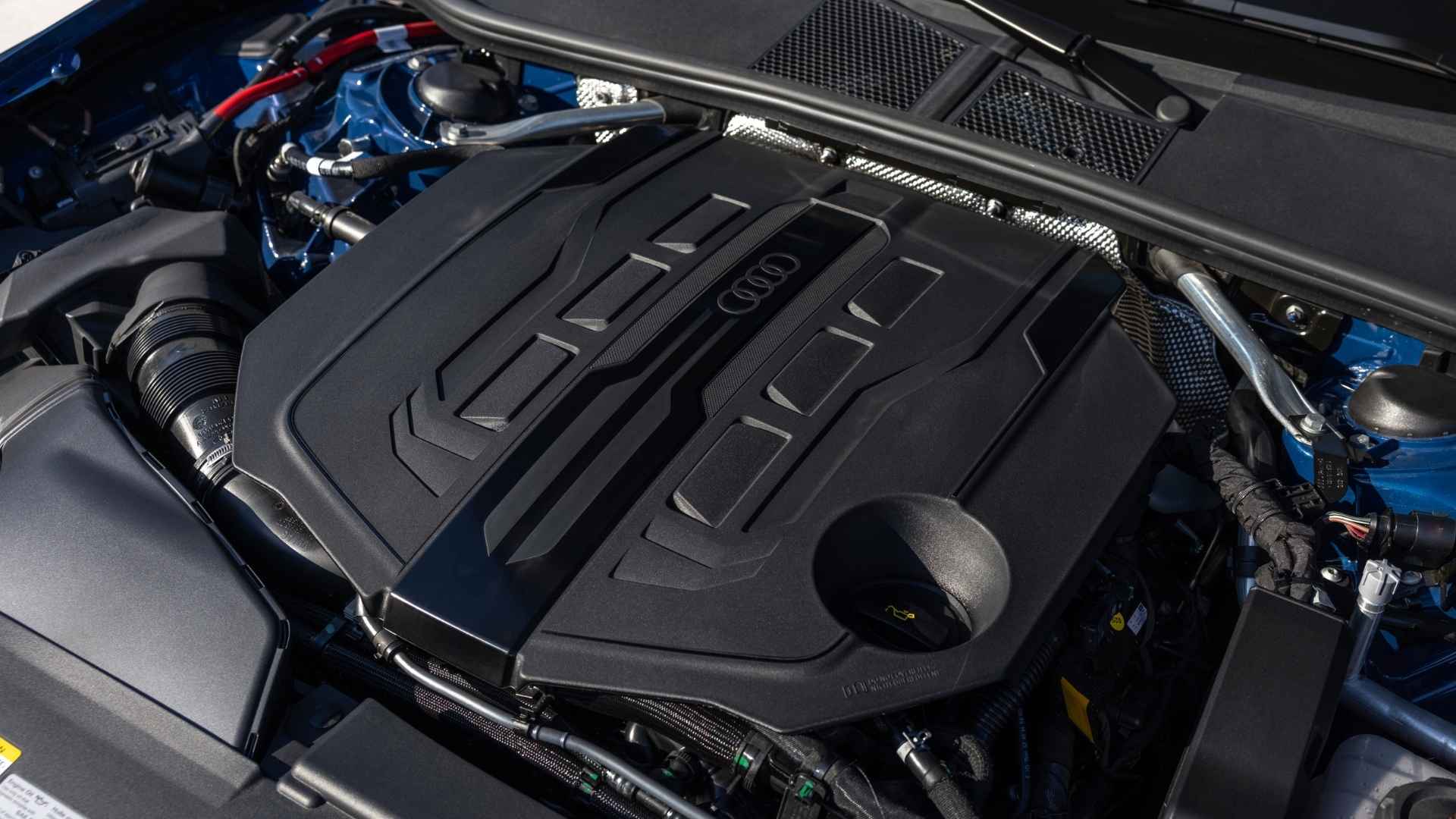
Electric Audi models approach the same objective differently. Audi e-quattro manages torque through electric motors and electronic control rather than relying entirely on mechanical connections between the axles. e-quattro distributes torque from the electric motors to the wheels in around 30 milliseconds, allowing the drivetrain to react rapidly as traction requirements change.
| quattro® Technology | Real-World Benefit |
|---|---|
| Variable torque distribution | Directs power toward available traction |
| quattro® with ultra | Balances all-wheel-drive capability with efficiency |
| Torque vectoring | Helps the vehicle rotate through corners |
| Sport differential | Actively distributes rear-axle power during cornering |
| e-quattro | Provides rapid electronically controlled torque distribution |
What Does Torque Vectoring Actually Do?
All-wheel drive helps determine where engine or motor torque goes, while torque vectoring helps the vehicle respond more precisely during cornering. Audi's available torque-vectoring technology applies braking to the inside wheel during a turn, effectively directing more usable torque toward the outside wheel.
That intervention helps the vehicle follow the driver's intended path through a corner. Drivers don't need to activate the system manually or change their steering technique. Its value lies in making the vehicle feel more controlled and responsive as speed, steering angle, and available grip change.
Audi Sport Differentials Take the Idea Further
Select Audi S and RS models can use a rear sport differential to distribute torque more actively across the rear axle. Instead of merely reacting to wheel slip, the differential sends additional power toward the outside rear wheel during cornering.
This helps the rear of the vehicle participate in changing direction rather than simply following the front axle. The result is especially relevant in performance-oriented Audi models, where substantial engine output must translate into controlled movement rather than simple straight-line acceleration.
How Does Audi Drive Select Change the Vehicle?
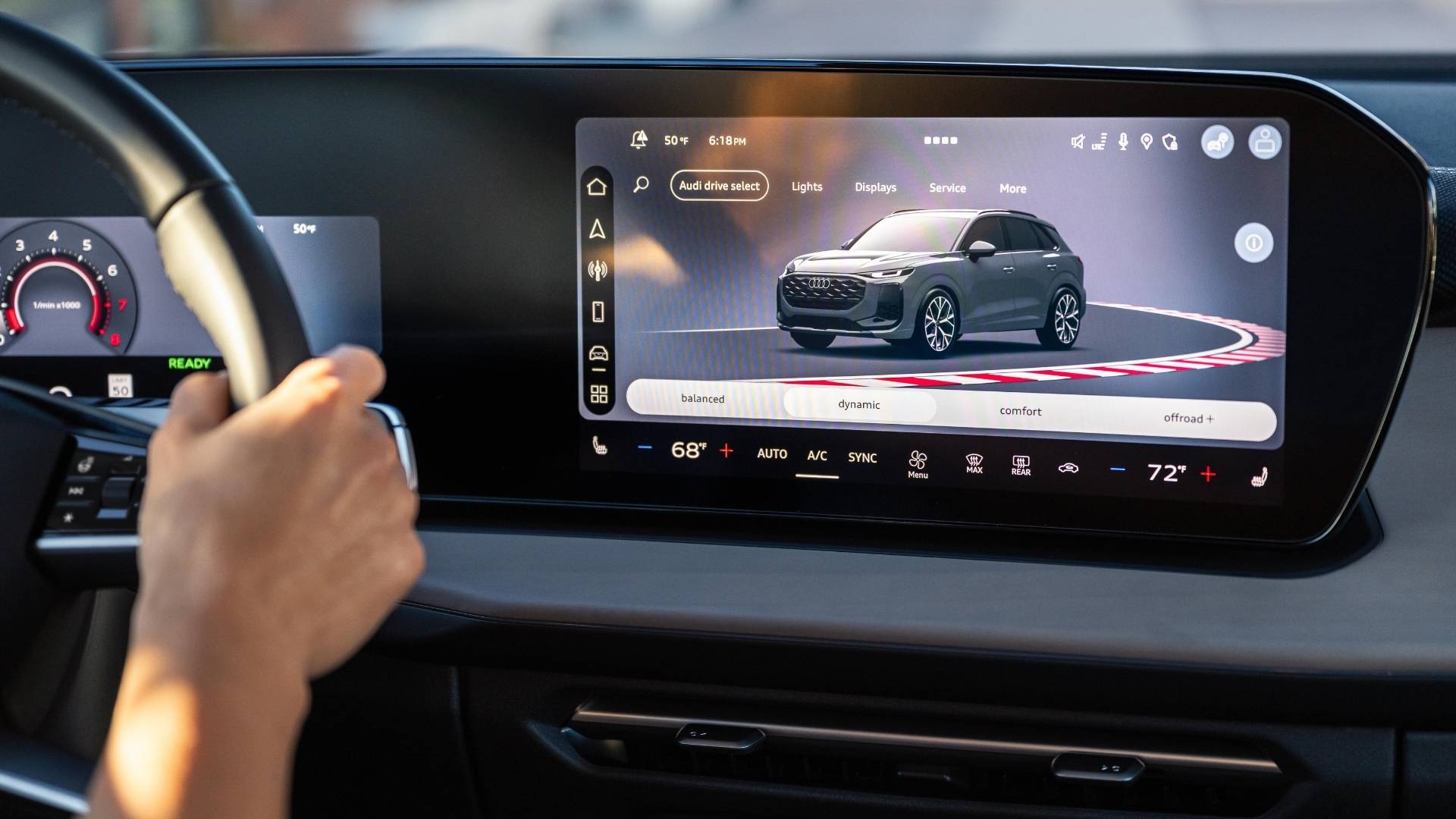
Audi Drive Select lets drivers change the character of compatible vehicle systems through selectable driving modes. Depending on the model, these adjustments can influence throttle response, transmission behavior, steering assistance, suspension settings, and other drivetrain characteristics.
The 2026 Audi A3, for example, provides Comfort, Auto, Dynamic, and Individual modes. Switching from Comfort to Dynamic can make applicable systems respond more immediately, while Individual lets the driver personalize certain settings.
Why Driving Modes Matter Outside a Racetrack
Drive modes are useful because the ideal vehicle setup changes with the road. Relaxed freeway travel demands different things from a vehicle than a winding canyon route.
A softer suspension response and less aggressive throttle mapping makes commuting more composed. On a more engaging road, quicker responses and firmer chassis behavior can make the vehicle feel more connected. Audi drive select allows one vehicle to adjust its character instead of forcing the driver to accept one fixed calibration everywhere.
What Does Adaptive Suspension Add?
A conventional suspension must balance two competing priorities: controlling body movement and absorbing road imperfections. Making a suspension extremely firm improves certain handling characteristics but may reduce ride quality. Tuning it too softly creates more unwanted body motion.
Adaptive suspension technology offers greater flexibility by changing damping characteristics based on the vehicle, selected settings, and driving conditions. The 2026 Audi S5, for example, offers Sport adaptive damping suspension, letting drivers adjust chassis dynamics to their preferences.
How Does All-Wheel Steering Make a Large Audi Easier to Drive?
Performance technology is not limited to increasing speed. Sometimes the most useful engineering makes a large vehicle easier to maneuver.
Available all-wheel steering on models such as the Audi Q7 changes the rear wheels' direction based on vehicle speed. At lower speeds, the rear wheels turn slightly opposite the front wheels, effectively helping the vehicle rotate through a tighter path.
At higher speeds, the rear wheels turn in the same direction as the front wheels to support stability. This single system creates two distinct advantages.
| Driving Situation | All-Wheel Steering Response | Driver Benefit |
|---|---|---|
| Parking and low speeds | Rear wheels turn opposite front wheels | Improved maneuverability |
| Tight urban turns | Helps vehicle rotate through a smaller path | Easier placement |
| Highway speeds | Rear wheels turn with front wheels | Greater directional stability |
| Lane changes | Coordinated steering response | More composed movement |
This technology can be particularly useful around Santa Clarita and greater Los Angeles, where a three-row SUV may move between open freeways, crowded parking structures, and tighter neighborhood streets during the same day.
Why Does Transmission Technology Affect Performance?
An engine produces substantial power, but the transmission determines how effectively that output reaches the road. Audi uses transmissions designed to complement each model's performance characteristics.
The current A5 and S5, for example, use a 7-speed S tronic® transmission. The S5 pairs it with a turbocharged V6 producing 362 horsepower and 406 lb-ft of torque, reaching 60 mph in 4.3 seconds. The A5 uses that same transmission behind a turbocharged four-cylinder producing 268 horsepower. One gearbox, two very different characters. Quick transmission response helps keep the engine operating where useful power is available while allowing smooth operation during less demanding driving.
Performance Is About Response, Not Just Output
Two vehicles with similar horsepower can feel very different if their transmissions, throttle calibration, traction systems, and chassis tuning respond differently.
That is why judging an Audi solely by horsepower misses much of the engineering. The interaction between powertrain and chassis technologies determines whether acceleration feels immediate, whether the vehicle stays composed in corners, and whether the driver can readily access its performance in everyday conditions.
How Do Electric Audi Models Deliver Performance Differently?
Electric motors can respond rapidly to torque requests, giving Audi engineers new ways to manage vehicle behavior. e-quattro uses electronically controlled electric motors to distribute torque without depending on the same mechanical connections used by traditional combustion-powered drivetrains.
On applicable performance EVs, e-torque vectoring plus can distribute rear-axle torque toward the wheel that needs it, improving both traction and agility. This demonstrates how Audi's traditional focus on drivetrain control is evolving as the brand moves further into electric performance.
Electric performance also changes how acceleration feels. Immediate motor response can provide strong initial acceleration without waiting for engine speed to rise or a conventional transmission to select another gear. The underlying technology differs, but the objective remains familiar: convert available power into controlled, usable movement.
Which Audi Performance Technologies Matter Most?
No single answer exists because different drivers value different aspects of performance. Someone who regularly encounters changing weather may value quattro® more. A driver who enjoys winding roads may appreciate adaptive damping or a sport differential. Families considering a larger SUV may notice the maneuverability benefits of all-wheel steering immediately.
| Driver Priority | Audi Technology to Consider |
|---|---|
| Changing road conditions | quattro® |
| More precise cornering | Torque vectoring |
| Performance-focused handling | Sport differential |
| Adjustable driving character | Audi drive select |
| Ride quality and chassis control | Adaptive suspension |
| Large-SUV maneuverability | All-wheel steering |
| Electric responsiveness | e-quattro |
An Audi dealer can help shoppers understand which systems are standard, optional, or unavailable on the model they are considering. That distinction is important because Audi configures its technologies differently across sedans, SUVs, S and RS performance vehicles, and electric models.
For a broader look at how these systems fit into Audi's engineering philosophy, Innovation At The Core Of Modern Audi Engineering explores the relationship between powertrain development, digital systems, chassis design, and modern vehicle technology.
Why Real-World Performance Is About the Whole Vehicle
The most effective performance technology often operates seamlessly in the background. Drivers may notice that an Audi exits a wet corner confidently, settles quickly after a road imperfection, or feels unexpectedly maneuverable in a parking garage without consciously identifying which system contributed.
That is the larger principle behind modern Audi performance engineering. Horsepower determines how much power a vehicle can produce, but drivetrain, suspension, steering, differential, and control technologies determine how effectively the driver can use it.
For shoppers visiting Audi Valencia, comparing these technologies alongside conventional specifications can provide a more realistic understanding of how different Audi models will behave around Valencia, Santa Clarita, and the greater Los Angeles area. A test drive that includes city streets, highway travel, turns, and lower-speed maneuvering can reveal differences that an equipment list or acceleration figure alone cannot communicate.